Is Sedecordle Worth Playing? A Skeptic’s Review of the 16-Word Puzzle
I thought Sedecordle was a joke when someone explained it to me. Wordle gives you one hidden word, so naturally somebody decided the correct improvement was to add another fifteen.
That sounds like the logic behind ordering sixteen desserts because one slice of cake tasted good. More isn’t always better. Sometimes it’s just more.
Sedecordle surprised me because its size actually changes the puzzle in an interesting way. You aren’t completing sixteen separate Wordles one after another. You’re solving all sixteen together, using the same guesses and learning something different from each board. The result requires more planning than the original format, but it doesn’t demand sixteen times as much effort.
I still wouldn’t call it relaxing. Enjoyably stressful feels more accurate.
What Is Sedecordle?
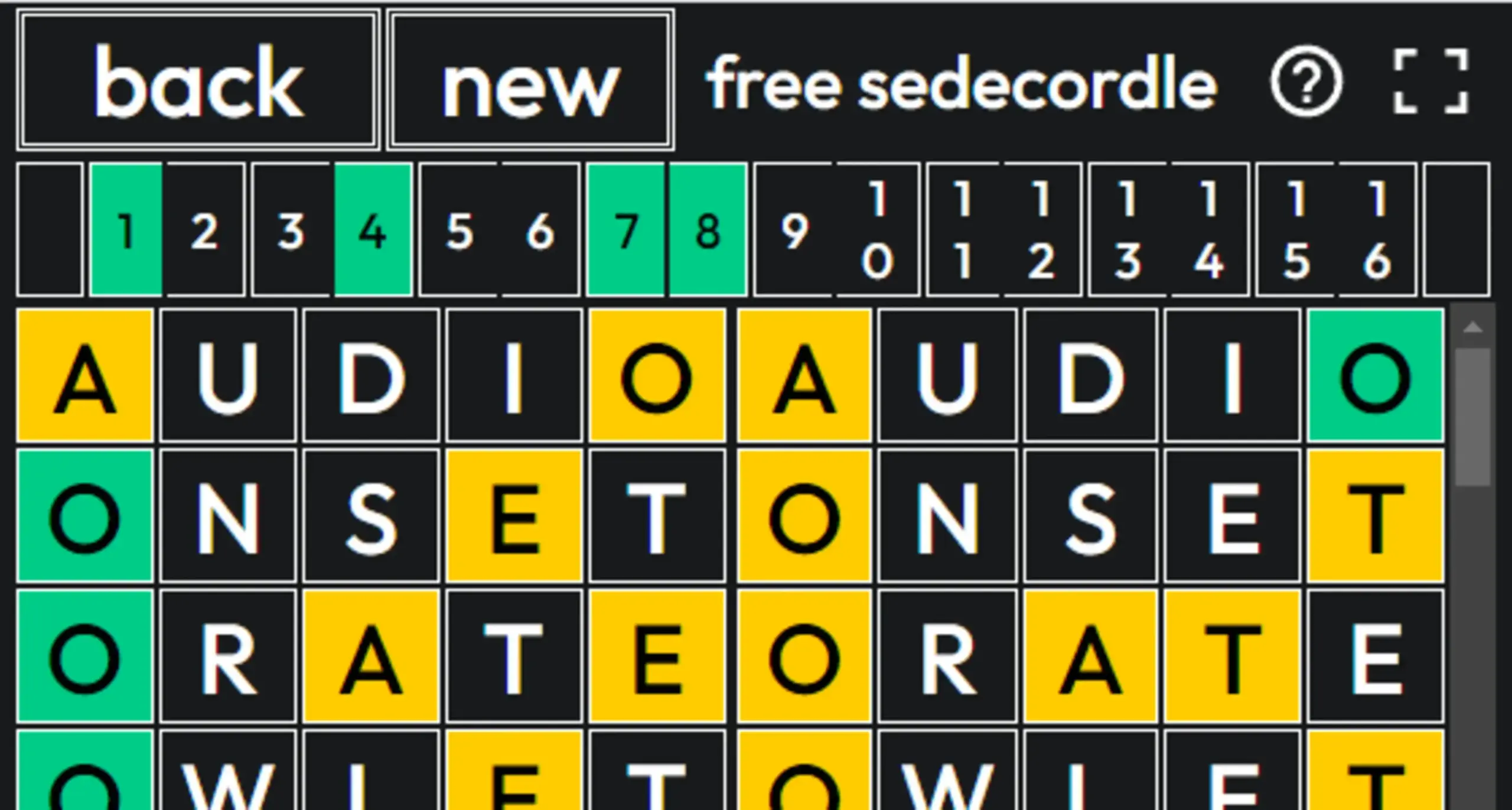
Sedecordle is a free online word game that challenges you to uncover sixteen five-letter words in twenty-one guesses. Every valid word you enter appears on all sixteen boards. Each grid then colors its letters independently.
Green shows that a letter is correct and in the proper position. Yellow means the answer contains that letter somewhere else. Gray rules it out for that board only.
The official Sedecordle website offers a shared daily puzzle and a Practice Mode for additional games. Sedec-order changes the formula by hiding every unsolved board except the current one, while the Variations section lets you play with words ranging from four to eleven letters.
You can understand the basic rules in a minute. Understanding what to do with all the information takes longer.
The First Few Minutes Are the Hardest
Sedecordle doesn’t make a gentle first impression. Sixteen boards fill the page, navigation buttons sit near the top, and your first submitted word creates a scattered mixture of colors. If you play on a phone, you’ll also spend time scrolling between sections.
I nearly left after the opening guess. The interface looked less like a casual game and more like I had agreed to review a spreadsheet.
Then I entered a second word.
Patterns started forming. One board had three green letters. Another contained a useful group of yellows. Several appeared completely unhelpful, but I could ignore those and concentrate on the clearer options.
That’s when Sedecordle clicked for me. The large grid isn’t asking for equal attention. It gives you choices. You decide which word is ready to solve and which one can wait.
The quick-jump buttons improve navigation by taking you directly to individual puzzles. They also indicate completed boards, making it easier to see your overall progress. The layout remains busy, especially on a small screen, but it becomes manageable once solved words begin disappearing from your workload.
How New Players Should Approach Sedecordle
Your opening guesses should cover common letters. Choose words with different vowels and frequent consonants, and avoid duplicate characters when possible. You want broad information across the sixteen boards.
Three setup words feel like a sensible starting point. Two preserve more spare guesses but may leave too many unclear patterns. Four reveal more letters but give you very little freedom to make a mistake. Five use your entire allowance beyond the sixteen required answers.
After the opening, stop testing random letters and look for actual solutions.
This transition seems obvious, yet it’s where many first games go wrong. Broad guesses feel safe because they produce colorful tiles everywhere. You can convince yourself that you’re making progress without committing to an answer. Eventually, you discover that seventeen words don’t fit into twelve remaining attempts.
Start with boards that have strong evidence. Check the fixed green letters, rearrange the yellows, and review which characters are gray. When one answer feels certain, enter it. That correct word will test another five letters on every unfinished board.
Sedecordle becomes easier through solving, not endless preparation.
Why You Should Ignore Some Nearly Finished Words
A board with four green tiles looks like an obvious priority. Sometimes it is. Other times, it’s a trap.
Imagine the pattern “_IGHT.” Several ordinary answers fit: EIGHT, FIGHT, LIGHT, MIGHT, NIGHT, RIGHT, SIGHT, and TIGHT. You could spend several turns trying them, but Sedecordle gives you no room for that kind of guessing spree.
Move to another board instead. As you submit confirmed answers, you’ll naturally test many of those first letters. The uncertain word may solve itself later.
I had to learn that leaving a nearly finished board alone isn’t a failure. It’s often the best strategic choice available. You’re waiting for the rest of the puzzle to remove the ambiguity for free.
Experienced players can take this idea further by choosing the order of their confirmed answers. If one solution contains letters that could distinguish several difficult patterns, submit it before an equally certain word made from already well-tested characters.
Basically, every answer is also an information tool. Use the most useful one first.
The Guess Limit Is Cleverly Uncomfortable
Twenty-one guesses for sixteen words creates a narrow but fair challenge. You have enough room to establish a strong opening and survive one or two uncertain moments. You don’t have enough room to throw random vocabulary at the screen.
The remaining-guess counter is helpful, but I recommend doing one extra calculation: subtract the number of unfinished boards from the number of attempts left.
If six boards remain and the counter shows eight guesses, you have two moves available for testing or mistakes. If both numbers are six, every remaining entry must be correct.
This calculation changes the emotional tone of the game. Eight guesses can sound comfortable until you realize six are already spoken for. I appreciate that pressure because it makes the closing stage feel meaningful rather than automatic.
Repeated letters can still ruin a careful run. Sedecordle uses standard color logic, so multiple copies of the same letter need close attention. If an answer refuses to fit despite several confirmed clues, consider whether a known character appears twice.
You’ll occasionally blame the dictionary. Check the duplicate letters before filing the complaint.
Daily Sedecordle or Practice Mode?
The daily game is ideal if you enjoy completing one shared challenge and comparing the result with friends. It gives Sedecordle a natural stopping point, assuming you possess more self-control than I do.
Practice Mode removes the daily limit and lets you start another puzzle immediately. It’s useful for learning the game because you can test different opening words and see how they affect the middle stage. Regular players can also use it to improve their completion time or practice solving with fewer setup guesses.
Sedec-order is a harsher variation. You see only one active word, and the next board remains locked until you solve it. The standard game lets you abandon an ambiguous pattern temporarily; Sedec-order makes you deal with it immediately.
I prefer the original format because choosing where to focus is part of the appeal. Still, Sedec-order provides a good challenge for players who have developed a reliable standard-game routine.
The variable word-length modes add useful variety. Four-letter answers look easier but can be highly ambiguous. Longer words provide more clues per guess, although they may test parts of your vocabulary that five-letter games rarely touch.
What Sedecordle Gets Wrong
The mobile experience isn’t ideal. Sixteen boards require space, and moving between them can become tedious on a narrow display. The jump controls help, but I’d still recommend a laptop or desktop for longer sessions.
The game could also do more with post-puzzle information. Optional definitions would be valuable when an unfamiliar answer appears. A detailed breakdown showing which guesses delivered the most information could help players understand their strategy rather than merely reviewing the final grid.
Visually, Sedecordle is functional rather than charming. That’s not necessarily a problem for a focused word puzzle, but anyone looking for animated rewards and elaborate presentation won’t find much spectacle here.
My Final Sedecordle Verdict
Sedecordle won me over because its sixteen boards aren’t a gimmick. They create a genuine strategic puzzle about attention and efficiency. You must know when to gather information, when to commit to an answer, and when to walk away from an uncertain pattern.
New players get an intimidating but learnable step beyond Wordle. Returning players can optimize their opening words, answer order, navigation, and use of the limited guess budget. Practice, Sedec-order, and different word lengths give the format enough variety to support regular play.
The interface is crowded, the mobile layout demands patience, and an unlucky word family can still destroy a strong game. Yet none of those issues stopped me from clicking Practice after finishing the daily puzzle.
I originally thought sixteen words sounded excessive.
Now one word feels a little lonely.